The male of all species on planet earth, from flies to elephants, have a genetic code that drives their behaviour and shapes their reproduction strategy. If they don’t, then they simply don’t reproduce. This primal urge exists purely to pass on their particular gene pool and what’s more, it’s hardwired into them! It’s also built into their ‘software’, and it has an ‘operating system’ too. The reproduction strategy differs across all species and generally falls into one of two buckets; Tournament species and Pair Bonding species.
Tournament species
Take a Lion for example; he could either win his place as head of a pride through combat or succession. Once in place, he would then rid the pride of all offspring still mother dependant, unless that offspring was of his family bloodline (a brother replacing a brother would not harm the cubs). Fair to say they have quite an aggressive strategy towards it. Tournament species can also be, those species that have beautiful displays, dances, etc., etc. (they have a bit more style and ‘swagger’). The brighter, bigger, more colourful the display, the healthier the specimen.
Pair Bonding species
Swans famously mate for life as do Gibbons. Gibbons are more significant in this because they behave more like humans do when it comes to forming relationships. They bond with a partner and like us they can philander and often dump one mate for another. All species can be categorised into one of these types, all that is except a few. People like to believe humans are a Pair Bonding species, but the truth is, like some of our ape cousins, we are somewhere in the middle, and yes, some are at the extremities.
Tournament species display high levels of aggression between males and/or high levels of competition, simply because the strongest, most powerful, resource-rich, or best looking, are the ones wanted by particular females attracted to these type of men. The female reproductive strategy in these women is to provide their offspring with a good genetic stock and/or resources. The wrestler The Rock and David Beckham are my thoughts on one of each Tournament type.
Pair bonding species are more collegiate and want to select a mate with which to raise a family or families. Some try to show that they can provide/protect, and this behaviour is best witnessed in the behaviour of birds. Male birds will; build nests; boy penguins take their desired lady penguin, a lovely shiny pebble (shiny pebbles are like diamonds to a penguin). The males in Pair Bonding species intend to hang around, and so have different drivers and physically different genetic encoding.
All men are on this spectrum somewhere, and there are some obvious clues to which side they lean towards, although the closer they are to the middle, the more blurred the boundaries. The obvious clues for Tournament males are; size, strength, aggression, power, resource rich, fame or infamy (some males try to fake out females by pretending that they have better genes/resources than they have). For Pair Bonding men they tend to be, smaller in size (closer to female size), less aggressive, more consistent and reliable, responsible and committed.
Robert Sapolsky explains this best in his Stanford University Lecture on Behavioural Evolution (you can find it on YouTube). He covers all aspects of this, and to be fair there’s a lot to it, but the part that switched the lights on for me was that this stuff is genetically encoded! He uses an example of how this genetic encoding manifests. He explains that Tournament type males have a toxin in their sperm designed to kill off all other sperm but not harm their own, (just to ensure that it’s his little swimmers that win the race). This toxin is dangerous to females and can lead to cancers, but fortunately, females can produce a neutraliser for this if all is well with their reproductive health. Pair bonding males don’t have these toxins because they are interested in protecting the long-term breeding health of their chosen partner. The foetuses of Tournament males then also have an aggressive burying gene, which drives these foetuses to try to bury deep into the wall of the uterus, this is to ensure that the embryo sticks for an effective pregnancy. Once again, the health of the female is not the consideration here, just the effectiveness of the pregnancy. This reproductive strategy serves the male only; genetically his driver is to reproduce and not to care about the long-term reproductive health of the female because he had no vested interest in being there. Again the female has means to neutralise this burrowing if all is well with her. Pair Bonding males again don’t pass on this gene to their foetuses, because as before, they are looking to protect the breeding health of their chosen partner.
This set my mind racing on behavioural markers and I started to think of the leaders and leadership teams I have known and worked with. I immediately I identified the Tournament males and the Pair Bonding males, and it blew my mind. Realising this stuff is hardwired into the genetics I get to ponder on how this drives other behaviour and approaches to life.
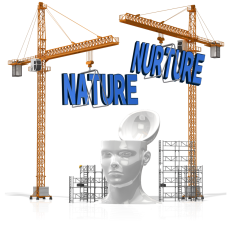
I am mindful though that this is just another insight, and it goes hand and hand with all of the others. Bad mistakes happen when you focus on just one aspect of the human condition, this is because, as a species, our behaviour drivers fall into many buckets; genetics, hormonal, nature, nurture, the list goes on.
To all my friends though in relationships with Tournament males, I hope that you ae connect on some loving and caring level with them. If it is only; passions, high emotions or bright displays that fuel your life together, then it’s likely to be only genetics that is driving your relationship, and that’s a tough code to crack.
I can imagine an Executive or Leadership team that is heavy in Tournament males will always have to deal with; political strategies, unhealthy competition and power plays, what an exhausting arena. If you would like to know more about building your personal resilience or that of a team, or you would like a deeper understanding of a groups dynamics, then please email us at enquiries@nakedtraining.org.uk and we can arrange a chat.
 lexfarndell.com